THE MARKETCLOSED.WE DIDN'T.
2,222 unlicensed brokers working the market after the closing bell.
Mint desk open — supply and price are read live from the contract.
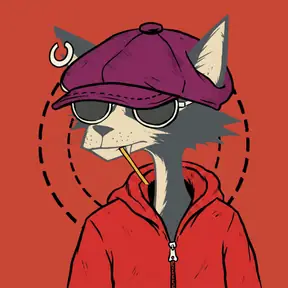
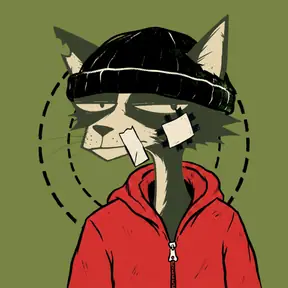
Or walk the roster — all 2,222 brokers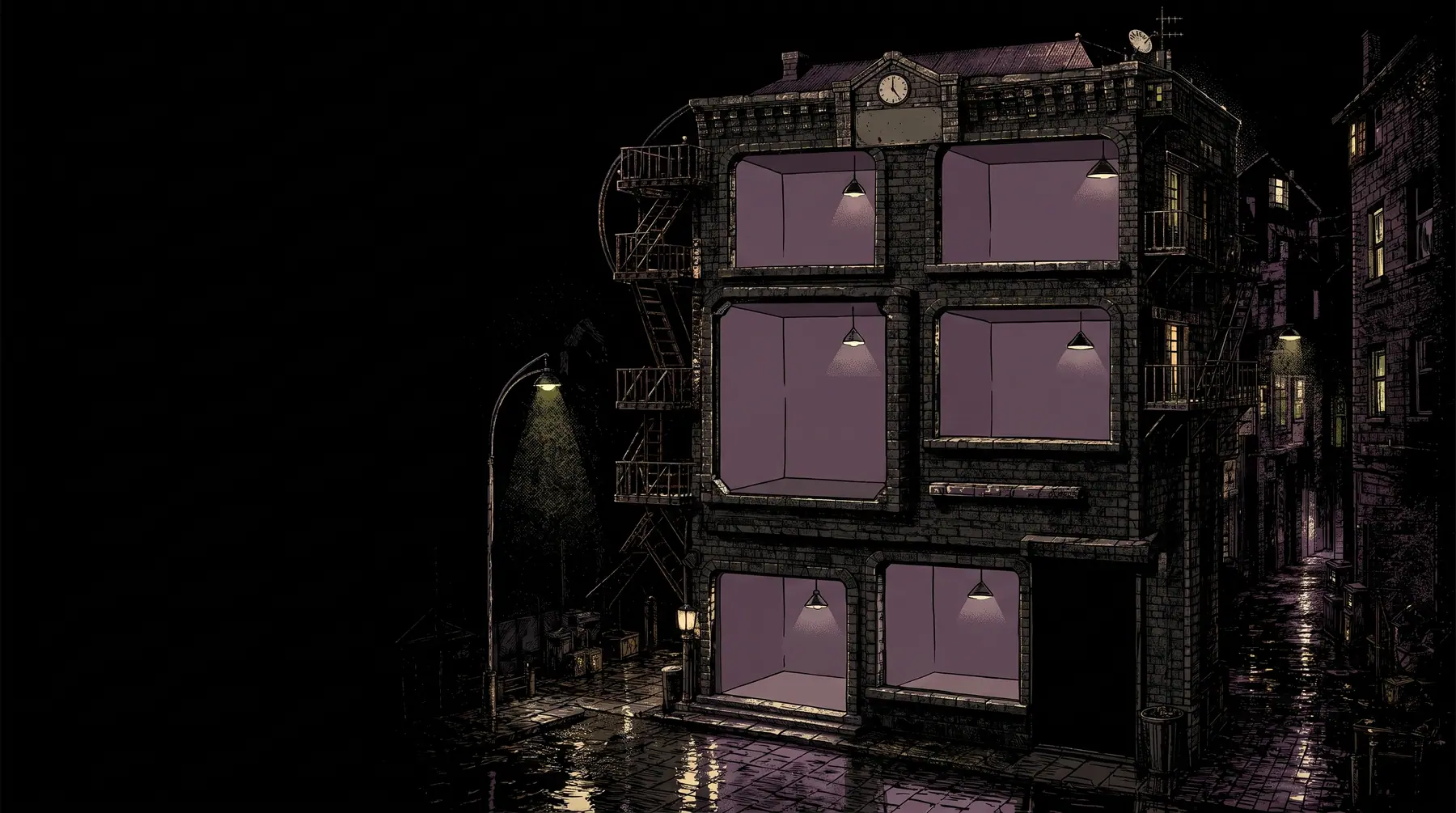
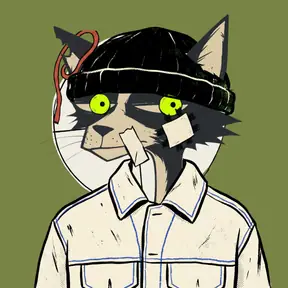

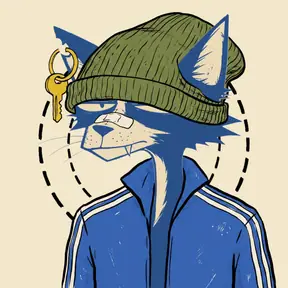
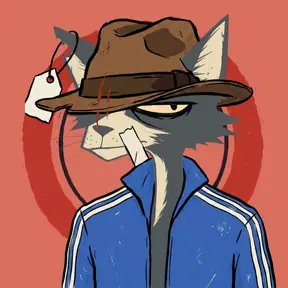
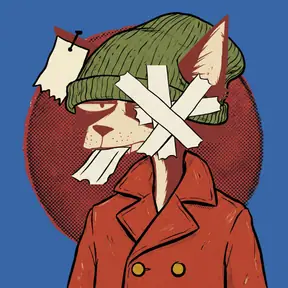

The rooms of the building are also listed as links below.
Where the mint is
One room does the selling. It is the lit window on the top floor of the building above, marked
MINT DESK, and it lives at
/mint. Nothing else on this site can take a payment.
-
01
Open the mint desk
The desk shows live supply, price, your per-wallet limit and the sale state, all read straight from the contract. Every one of those is blank until there is a contract to read.
Go to the mint desk -
02
Connect and choose a quantity
Pay in ETH or in USDG, both priced the same. The quantity cap is the smallest of remaining supply, your wallet allowance and a per-transaction cap.
-
03
Your broker starts at Sidewalk
Every broker mints at its origin tier and works four more jobs from there. Its dossier records the traits, the evolution timeline and the hashes that prove the art was committed before mint.
See the five lives
The contract is live at 0xd438a5335b5ae0a4e5d17c218eca5e67c6732cd2 on Robinhood Chain.
One print run.
No fan art.
The exchange closes at the bell. An unlicensed brokerage in the alley behind it does not. Every broker is printed from the same canonical rig — one silhouette, one eye line, one locked camera — so 2,222 tokens read as a single press run rather than a thousand separate prompts.
Finance only shows up as street ephemera: tape, bell tags, receipt paper, work jackets. There are no charts, no rockets and no suits. The rarest broker in the set still has to look like it came off the same press as the most common one.
2,202 brokers are built from exact integer trait quotas across 9 slots. The remaining 20 are anomalies: drawn one-of-one artworks that share no traits with the generative set, sit outside every quota, and do not evolve.
- 01Flat ink only — no gradients, no 3D, no glossy render.
- 02Four or five visible inks per token.
- 03Every rare trait still has to read at 96 px.
- 04Exact integer quotas resolved by largest-remainder allocation, not loose sampling.
- 05108 configured traits. 11,110 frozen renders.
Slots, not milestones
Every tier above the street is capped. A climb consumes one of a fixed number of slots, and a slot that stops being fed comes back for someone else. Ninety-nine brokers can hold Nine Lives at once — the number is the whole story.
- I Sidewalk Uncapped Everyone starts here
- II Tape Runner 1,111 1,111 open
- III Floor Cat 444 444 open
- IV Closing Bell 222 222 open
- V Nine Lives 99 99 open
Caps shown are the configured design. Live occupancy appears here once the tape controller is deployed — until then no slot is taken, because nothing has been minted.
How the loop turns
- FeedClimb costs 0.01 → 0.08 ETH depending on the tier you are leaving. A full climb is roughly seven times a mint, because a tier that costs less than the token is not a gate.
- SlotThe climb takes one of the capped slots at the tier above. When they are gone, they are gone until someone lets one go.
- DecayA fed tier lasts 90 days, then a 14-day grace. After that anyone can drop the token one tier and collect a bounty — which is what keeps the table honest without a paid indexer.
- VaultFees split 40/35/25 the moment they land: floor bid, held pot, operations. The floor bid buys the collection's own floor and retires it, so supply falls below 2,222 permanently.
Feeding buys access to a slot and nothing else. No mechanism here pays a share of revenue to token holders, and the vault has no distribution path — that is a deliberate structural choice, not an oversight. A one-of-one holds Nine Lives from birth, outside the 99, and never has to feed.
Five lives, one broker
Identity traits never change. Only the garment picks up wear — tape stitches, repair seams, bell hardware, then full archival patching. A broker that advances is still unmistakably the same animal, and advancing only moves which frozen document the token points at. It never re-rolls traits.

Committed before anyone mints
Trait assignment is seeded by a 32-byte secret. Its hash goes on chain at deployment, before the first mint. At reveal the secret itself goes on chain, so anyone can re-run the generator and confirm that a given broker really drew what it shows.
These are development values. A fresh production secret is generated offline for the real freeze, which changes every assignment, every anomaly id, both CIDs and the provenance hash.